A useful robot data-collection setup combines a task-capable arm, an operator interface, observations, action recording and a repeatable way to review each episode. Choosing the arm is an important step, but it does not complete the system.
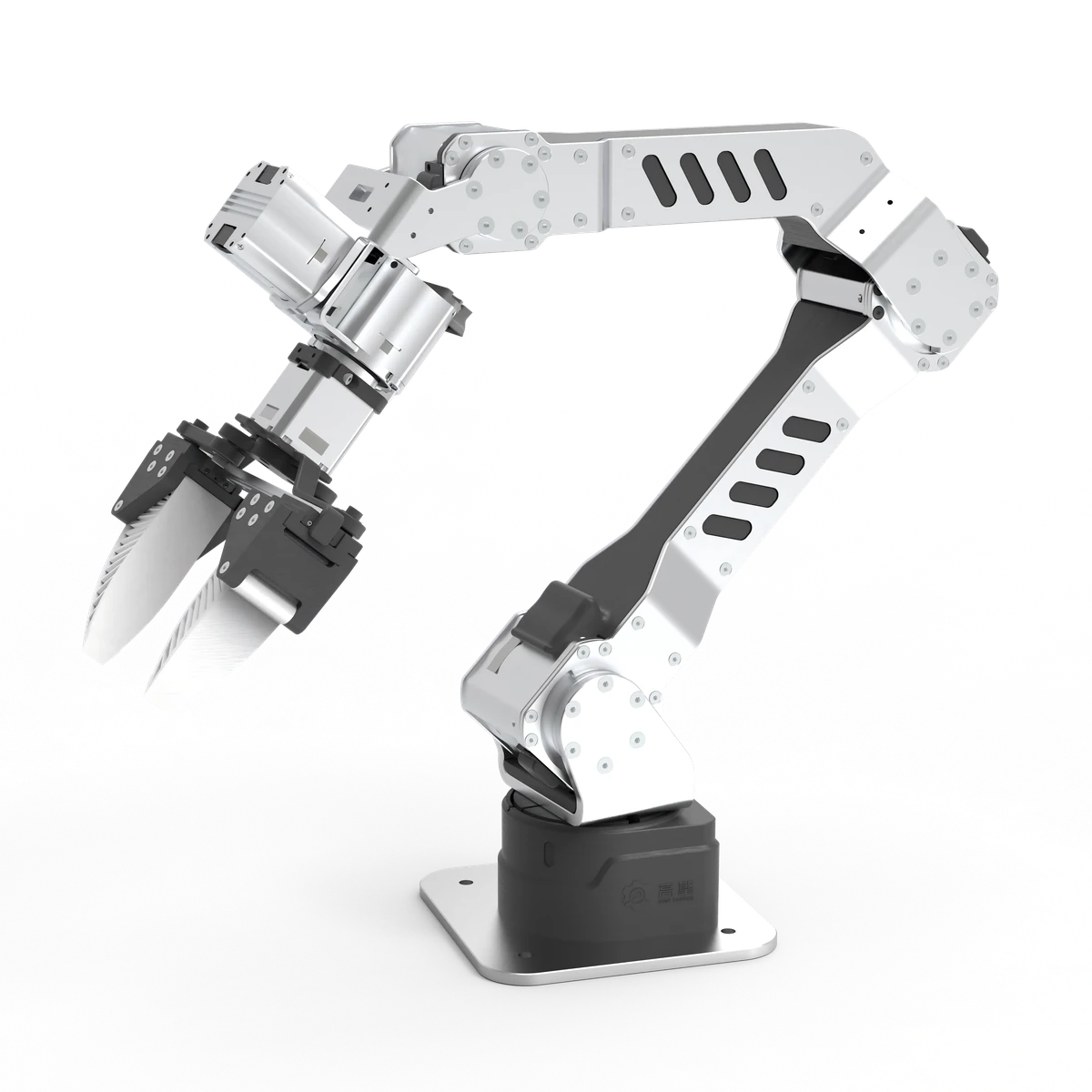
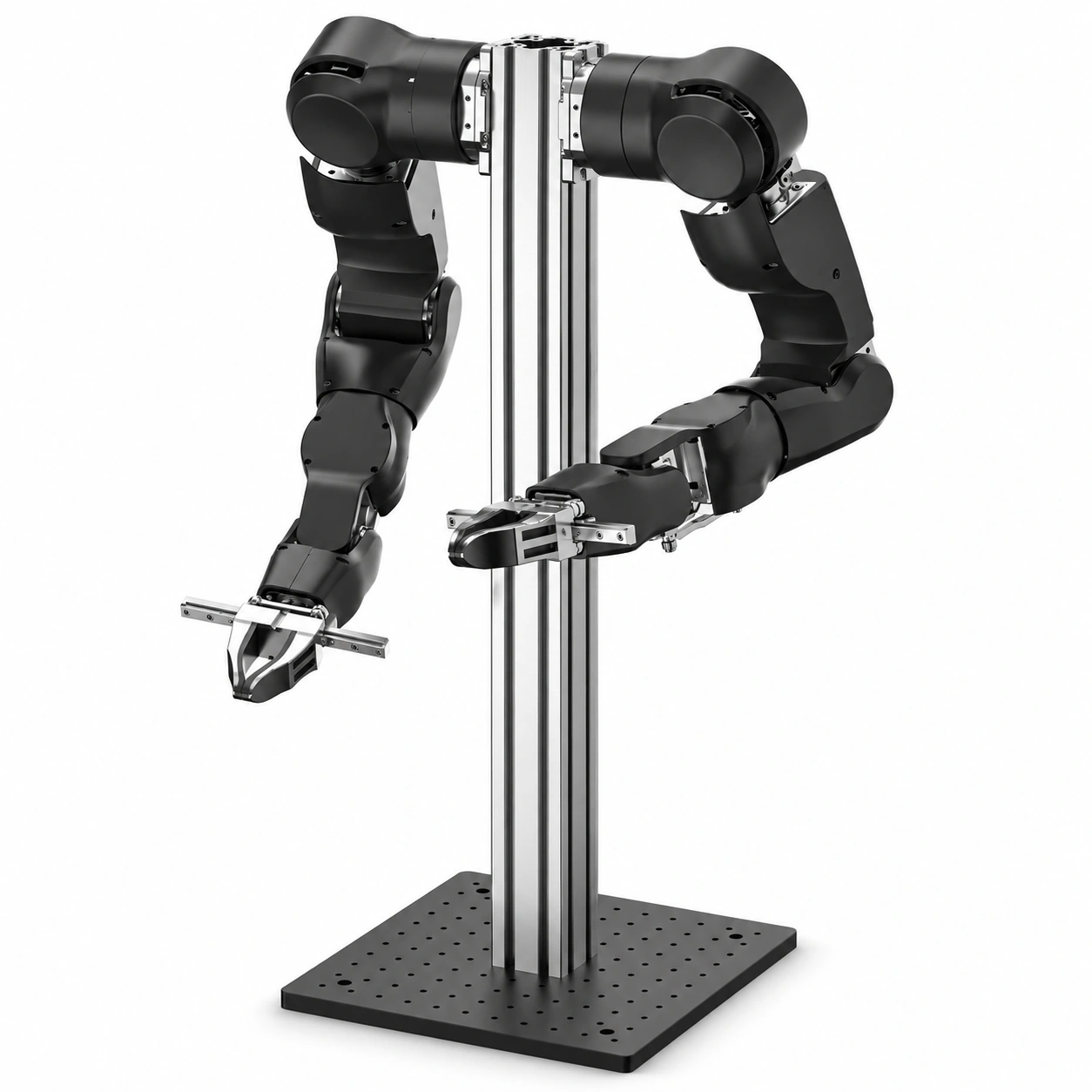
XTIVOR offers robotic arms to evaluate for this hardware layer, including the six-axis XTR-A600 and an XTR-A700 configuration for projects considering additional articulation or two-arm tasks. Start with one representative demonstration and specify the complete recording path before scaling the hardware order.
Define the demonstration you want to capture
Write the task as an observable sequence. “Move the block from the tray to the marked area” is more useful for configuration than “collect manipulation data,” because it identifies objects, locations and a completion condition.
Add the starting state, expected grasp, permissible object variation and what counts as an unsuccessful attempt. These choices influence the working area, camera coverage and the metadata needed to interpret the recording later.
An initial test could use a single object and fixed pickup location. That is an example of a controlled commissioning task, not a prescription for the diversity or scale of a final training dataset.
Specify the hardware and who supplies it
| System element | What to decide | What to ask in the quotation |
|---|---|---|
| Robot arm | Required working poses, tool load and motion | Model, revision, controller and documentation |
| End effector | Grasp geometry and measurable state | Included tooling, interface and control access |
| Operator device | How a person commands motion | Supplied device, mapping and integration scope |
| Cameras | Views needed to observe the task | Camera models, mounts and connection requirements |
| Host computer | Recording and control environment | Supported operating system, interfaces and software responsibilities |
| Timing and recording | How observations align with actions | Timestamp source, logging behavior and output format |
| Mounting and services | Stable layout, power and cabling | Included stands, cables, supply and additional requirements |
Ask for a configuration list that marks each item as included, optional or customer-supplied. This prevents two quotations for “a data-collection system” from referring to very different equipment.
Choose an operator interface around the task
A leader mechanism, hand controller or another input device can imply different motion mappings and commissioning work. Specify whether the operator commands joints, an end-effector pose or another action representation.
Then define how motion is enabled, paused and returned to a known state. Ask for a demonstration of the intended interaction with the selected arm and controller; the device's availability alone does not establish a complete teleoperation workflow.
For a two-arm setup, clarify whether one operator controls both arms and how coordinated actions are represented. This decision belongs in the system design before large-scale recording starts.
Make observations and actions explicit
Create a small data dictionary before implementing the recorder. For each field, specify its meaning, units, dimensions, source and expected sampling behavior.
| Example field | Definition to establish |
|---|---|
| Joint position | Joint ordering, units, reference and calibration |
| Gripper state | What is measured and how it relates to opening or closing |
| Camera observation | View name, resolution, timing and calibration record |
| Commanded action | Joint or Cartesian representation and target timing |
| Episode outcome | Success, failure or interruption criteria |
LeRobot's custom-hardware integration guide defines an interface for obtaining observations and sending actions. Use that documentation to plan the integration if LeRobot is your chosen stack; it does not establish that an XTIVOR model already has a validated implementation.
Review timing with a small pilot
Record a short, easily recognizable action and compare the camera stream with the command and state traces. Check for missing samples, repeated frames, inconsistent timestamps and unexpected gaps at episode boundaries.
Distinguish when a command was issued from when a state was observed. A field labeled “timestamp” is not enough unless the team knows what event it represents and how its clock relates to other streams.
Keep this pilot separate from the main collection campaign. Resolve any mismatch in units, calibration, joint order or recording layout while the dataset is small enough to inspect directly.
Agree on a dataset structure and review procedure
Specify the episode identifier, task description, hardware revision, calibration reference and recording configuration. Decide how interrupted attempts are retained or excluded, and make that decision visible in the dataset rather than relying on a folder name.
The official LeRobot dataset documentation describes episode-aware organization with state, action, video and metadata components. Pin the format and software version used by your project so recordings can be reopened consistently.
Before scaling, ask a second team member to load one recorded episode and explain what happened using only the delivered data and its documentation. That provides a practical check on whether the handoff is understandable.
Where XTIVOR arms enter the shortlist
XTR-A600 lists six axes, CAN FD, a 3.5 kg maximum payload and a low-level control SDK. Confirm available feedback, commands, delivered software revision and the task's working poses.
XTR-A700 is a candidate when evaluating a seven-axis arm or a proposed two-arm layout. The quotation must identify the number of arms and the supplied controllers, grippers and mounts; data-collection support needs its own validation.
Frequently asked questions
Is video alone sufficient for the proposed setup?
That depends on the learning objective. If the pipeline requires robot states and actions, the recorder must provide those fields with defined timing as well as video.
Does an SDK mean LeRobot integration is finished?
No. Confirm the required interface, implementation and end-to-end test with the specific software and hardware revisions.
How much data should the first pilot contain?
Enough to inspect the intended task, reset and failure paths. The pilot is for validating the collection system; the amount needed for model training is a separate experimental decision.
Request a task-specific hardware configuration
Visit teleoperation and data collection and send your task, operator-interface plan, camera needs and quantity to jennie@xtivor-robot.com. Ask for a clearly itemized configuration and exact or volume pricing.